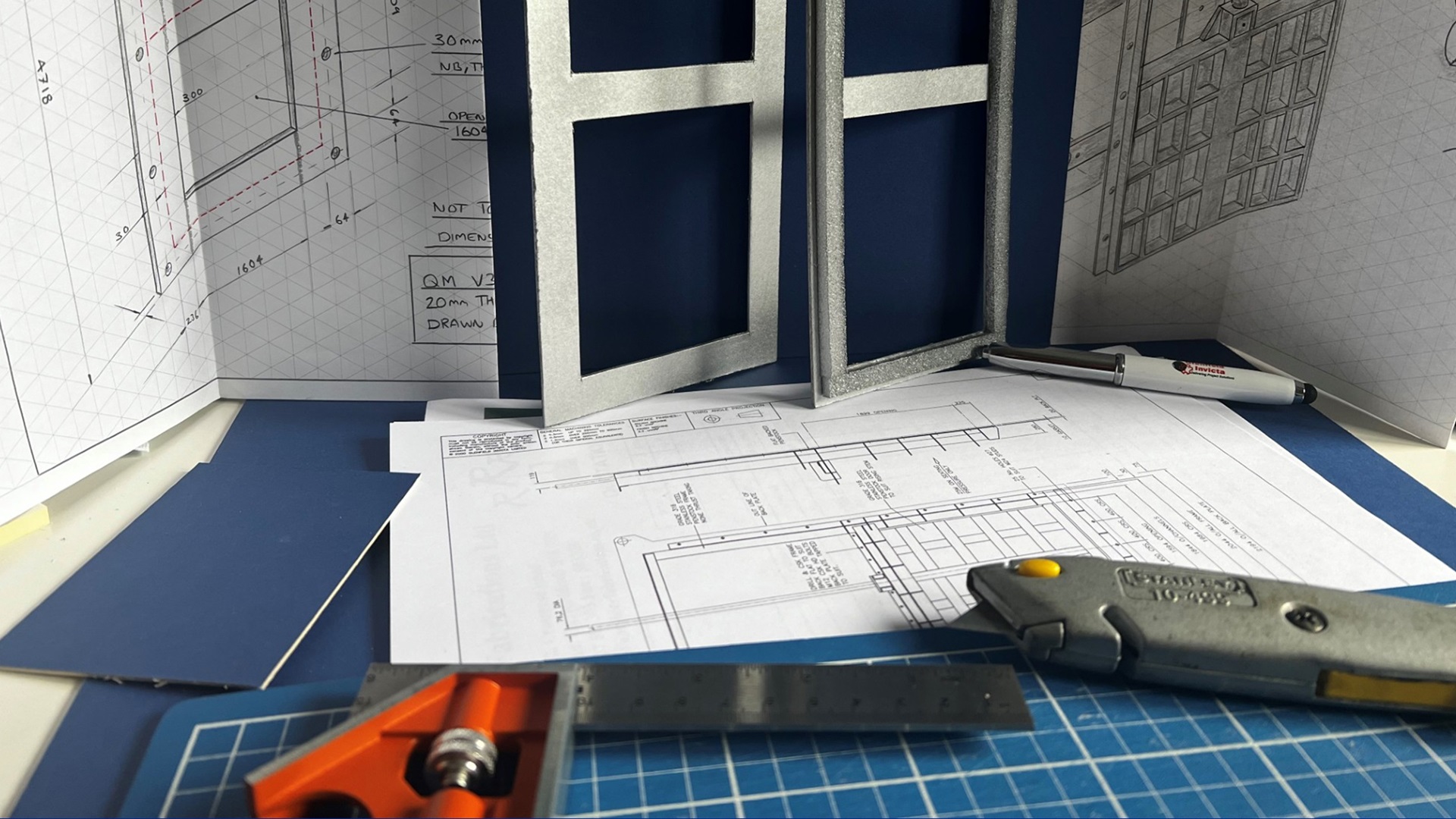
Teamwork, skills and coordination were key enablers in facilitating the underwater penstock replacement at the Queen Mother Reservoir. A fascinating project that required meticulous planning.
By Harriet Watson, Marketing Executive, Glenfield Invicta
Just four miles west of Heathrow Airport, the Queen Mother Reservoir stretches across just about 2 km2— a massive inland body of water forming a critical part of London’s drinking water infrastructure. Inaugurated in 1976 and operated by Thames Water, the reservoir is constructed from compacted London Clay core embankments, drawing water from the River Thames through tunnels located 20 metres below ground level.
On the surface, it is a calm and stable environment. But when a vital piece of submerged infrastructure — a 3.6m x 1.8m draw-off penstock — failed at a depth of 24 metres, the solution required precision engineering, underwater operations, and a meticulous project plan.
The Problem Below
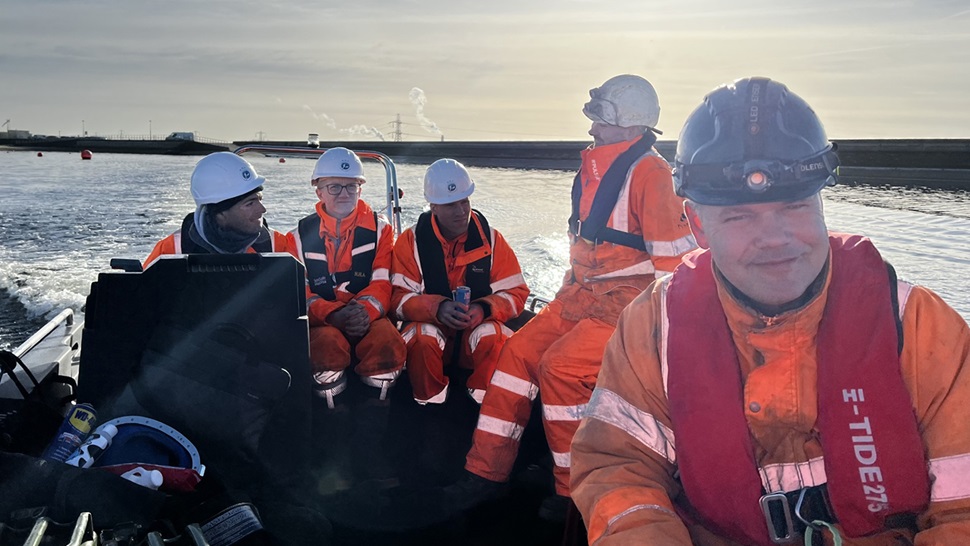
During an engineering inspection in 2023, the lowest of the reservoir’s ten penstocks — mounted on the walls of the outlet tower — was found to have failed in the closed position. These penstocks are not just structural features; they play an essential role in regulating water levels and enabling emergency drawdown. Accessing the failed unit presented a formidable challenge.
“Emptying the reservoir — which holds around 37 million metres3 of water — simply wasn’t an option,” explains Ken Ottley, Glenfield Invicta’s Engineering Services Manager for Dams, Reservoirs and Hydropower. “It was clear that the work would have to be carried out by divers, and that meant we needed a strategy that engineered out as much risk as possible.”
From Survey to Commissioning
The project began in August 2023, with Glenfield Invicta commissioned to survey the submerged penstock and develop a viable solution for its safe removal and replacement. A deep-water survey was conducted to map the existing penstock, frame, and operating components. That data was then used to create a detailed 3D model, allowing engineers and divers to plan and visualise each step of the operation.To de-risk the final installation, Ottley developed an approach that simplified the most critical stage of the work: alignment and fixing. His solution involved bolting a custom-designed backplate directly to the tower wall once the old penstock was removed. The new penstock could then be securely fastened to the backplate, removing the need for precise underwater alignment under challenging visibility and physical constraints.
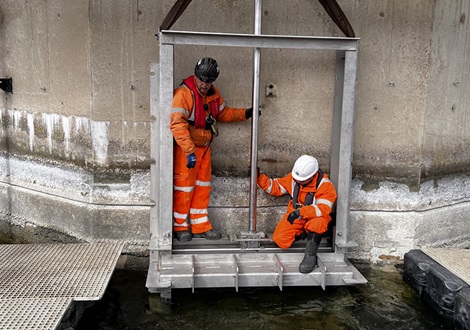
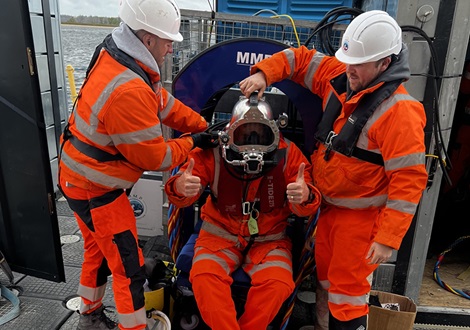
“Given the restricted movement in diving suits and helmets, simplicity was paramount. The backplate allowed the divers to position and fix the new unit without spending excessive time or making complex adjustments at depth,” Ottley adds.
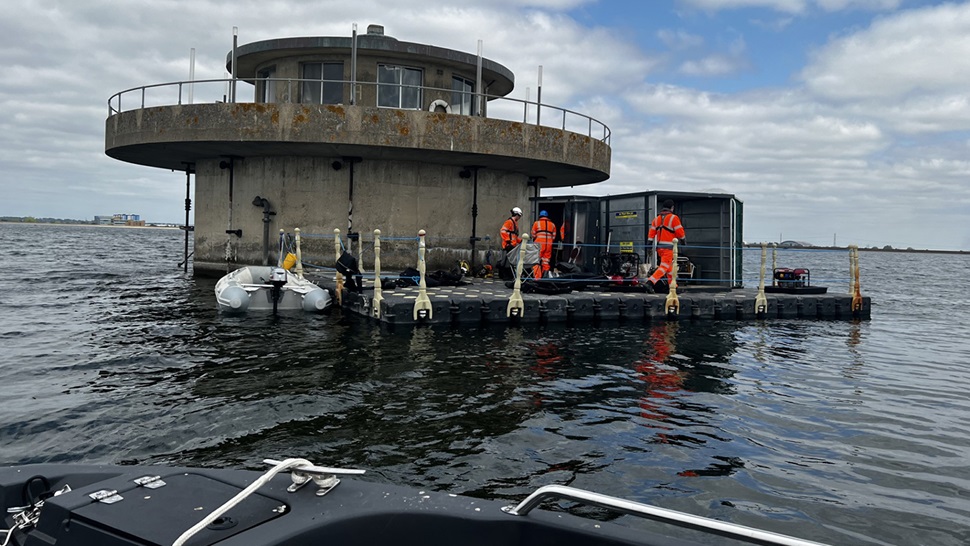
Before tackling the 24m-deep penstock, the team conducted a trial installation on a similar penstock located just 6 metres below the surface. This dry run allowed them to test the work pontoon, lifting frame, and underwater cutting and drilling procedures, giving the client confidence to proceed with the full operation.
Installation and Execution
When the final replacement began, the reservoir level was lowered by 10 metres to improve dive conditions. At 14 metres depth, divers could safely work for 98 minutes at a time. Had the full depth of 24 metres been required, dive time would have been limited to just 29 minutes — significantly increasing both risk and project duration.
The removal of the old penstock involved precision cutting using thermal lances, a process monitored in real time from the surface.
“Watching on the monitors as the divers worked with thermal lances to remove the penstock was incredible. It was a true demonstration of teamwork, skill, and coordination,” says Ottley.
Once the original penstock was removed, the replacement unit — supplied by RRR (Treble R) of Redditch — was installed using the backplate system. While the existing operating gear and refurbished spindles were retained, the actuators were upgraded to the latest Rotork IQ models, offering greater reliability and remote operation capability.
Final commissioning of the new equipment was completed in October 2024, with full documentation provided.
A Model of Collaborative Engineering
This project stands as a prime example of Glenfield Invicta’s ability to deliver complex, high-risk infrastructure solutions through innovation, collaboration, and technical expertise.
“I was very fortunate to be part of such a fascinating project and to work alongside such a committed team of engineers and divers. The success of the installation speaks volumes about the planning and professionalism involved,” concludes Ottley.